In 2006, Tiffany Kodak submitted her dissertation titled, Evaluating Preference for Reinforcers under Varying Schedule Requirements in Children with Developmental Disabilities to the Department of Psychology at Louisiana State University as a part of her PhD in Psychology. This study was designed to evaluate how autistic children choose between different prizes when the amount of work changes. The research aim was to produce guidance for teachers on how to reward students, by finding the right balance between how hard a task is and how good the prize is. The purpose of the experiments was to help find better ways for teachers to motivate children with disabilities and reduce their frustration during schoolwork.
Participants and methods:
The study looked at five autistic kids (ages 4 to 9) who often acted out like hitting or screaming, to get out of doing schoolwork. To be in the study, the kids had to be able to recognize different pictures so they could pick their own prizes.
To start, the researcher made sure the kids were only ‘acting out’ to escape work. During the lessons, if a child stayed stuck, the researcher followed a “tell, show, help” rule: first they gave a verbal direction, then they showed how to do it, and finally they guided the child’s hands. If the child misbehaved, the researcher ignored the behavior and kept focusing on the work, until it was completed.
Once the work was finished, the child got to pick their prize. The researcher put two pictures on the table like a snack and a break, and asked the child to choose one. By doing this, the researcher could see which prize was “worth the work” and figure out the best way to keep the kids motivated.
| Name | Age | Diagnosis | Key Problem Behaviors |
| Larry | 6 | Autism | Aggression (scratching), throwing materials, screaming |
| Casey | 7 | Autism & Moderate Intellectual Disability | Aggression (hitting), Self injurious behavior (hand biting, head/body hitting) |
| Mary | 9 | Autism & Visual Impairment | Self injurious behavior (arm biting), whining, mouthing instructional materials |
| Sam | 4 | Autism | Aggression (hitting, hair pulling), spitting, flopping |
| Scott | 4 | Autism | Aggression (pinching), throwing materials, saying “no” |

Methods:
The researcher used two main “checking” methods. First, they constantly switched between easy and hard work to see if the children’s choices changed. Second, they used a “back-and-forth” test: they would start with an easy setup, switch to a hard one, and then go back to the easy one again. This would prove that the kids were changing their minds because of the workload, not just random misbehavior.
The study was done in three parts.
- They checked if doing more work made kids switch from snacks to breaks.
- They tried to make the break better by adding toys and fun.
- They replaced the favorite snacks with boring ones to see if that would finally make the kids choose a break.
The results showed that most kids would do a lot of work just to get a snack. However, they were much more likely to pick a break if the snack was boring or if the break included fun toys. This research finding is reported as helpful to teachers, because they can find the “sweet spot” where the work isn’t too hard and the reward is just right to keep a student motivated.
The Functional Analysis
The researcher used five specific 10-minute conditions to “test” what triggered each child’s problem behavior. The Functional Behavior Assessment (FBA) describes the adult behaviorists’ behavior during the experiment. This was described as a means for determining if the child was acting out to get something or to get away from something:
- Attention: The therapist ignored the child until they misbehaved, at which point the therapist provided 20 seconds of reprimands to see if the child was “working” for adult attention.
- Demand: The therapist gave instructions and used a three-step prompt (tell, show, help). If the child acted out, the work was removed for 20 seconds. This tested if the child was acting out to escape the work.
- No Interaction: The child was in an empty room with no toys and a silent therapist. No matter what the child did, they were ignored. This tested if the behavior was “automatic” (self-soothing).
- Tangible/Food: Highly preferred toys or snacks were taken away and only returned for 20 seconds if the child misbehaved. This tested if the child was acting out to get a specific item.
- Play (Control): The child had toys and constant attention with no demands. This served as a baseline to see how the child behaved when they were “happy” and had everything they wanted.
The research experiment was conducted in three phases.
The Assessment – Before the main study began, the children underwent a “No Interaction” test. A child was placed in a room with absolutely no toys or activities. The therapist sat nearby but was strictly forbidden from speaking to, looking at, or touching the child. If the child began to cry, scream, or even hurt themselves, the therapist remained unresponsive in the “ignoring” phase. The assessment was designed to expose the child to an adult to evaluate how they react to being in that controlled setting. A preference assessment checked which food or nonfood items were pleasing to the individual child.
The Work – During the actual work sessions, the researcher used a rule called extinction. This meant that if a child tried to communicate that they were tired or overwhelmed by pushing materials away or shouting “no”, the therapist simply did not react. By ignoring these protests, the researcher ensured that refusal was not an option. The session only moved forward when the child submitted and finished the task. This forced the child to endure up to 40 repetitive tasks, like stringing beads, just to reach a moment of relief. The work was designed to solicit compliant behavior while noncompliant behavior is not responded to.
The Reward – The “prize” of a break was designed to be a scientifically cold environment. The child’s preferred reward item was expanded to include an “enriched break” as a reward option, as opposed to a break without adult interaction. If a child chose a break instead of a snack, the therapist would immediately turn their back and walk away for 30 seconds. Kodak claims that this would ensure that the break was strictly about the “removal of work” and not about human connection. The behaviorist hereby narrows the controlled setting to teach a value for task compliance, and rule out that compliance was performed to please the adult.

Results:
The results of the study showed that children’s choices were heavily influenced by how much work was required and how much they liked the reward. Most of the children in the study preferred snacks over a simple break and were willing to finish as many as 40 tasks just to get a treat. However, this motivation had a limit; if the work became too exhausting, some kids eventually stopped choosing the food and picked the break instead. This showed that even a favorite reward has a ‘tipping point’ where it is no longer worth the effort required.
The researcher also found that the quality of the prize mattered just as much as the amount of work. When the break was made more exciting by adding toys or attention, it became a much stronger competitor for the snacks. On the other hand, if the favorite food was replaced with something boring, like a plain cracker, the children quickly lost interest and switched to the break. These results help show that by making rewards better or tasks easier, teachers can find the best way to keep students motivated and productive.
| Participant | Did they prefer food? | What made them switch to a break? |
| Larry | Yes | Adding “fun/ social interaction” to the break. |
| Casey | Yes | Making the work harder or using boring food. |
| Mary | Always | She almost never switched; she chose food every time. |
| Sam | Yes | Using boring food or a “quiet” break without toys. |
| Scott | Sometimes | He was the only one who naturally preferred breaks more often. |
Reading the study from the kid’s perspective
For these children (ages 4–9), the study wasn’t about theories; it was about endurance. They sat in therapy rooms doing repetitive tasks like sorting colors or stringing beads. To get a reward, they had to follow a “tell, show, help” rule. Once they finished their work, they were given a simple choice: a snack or a 30-second break.
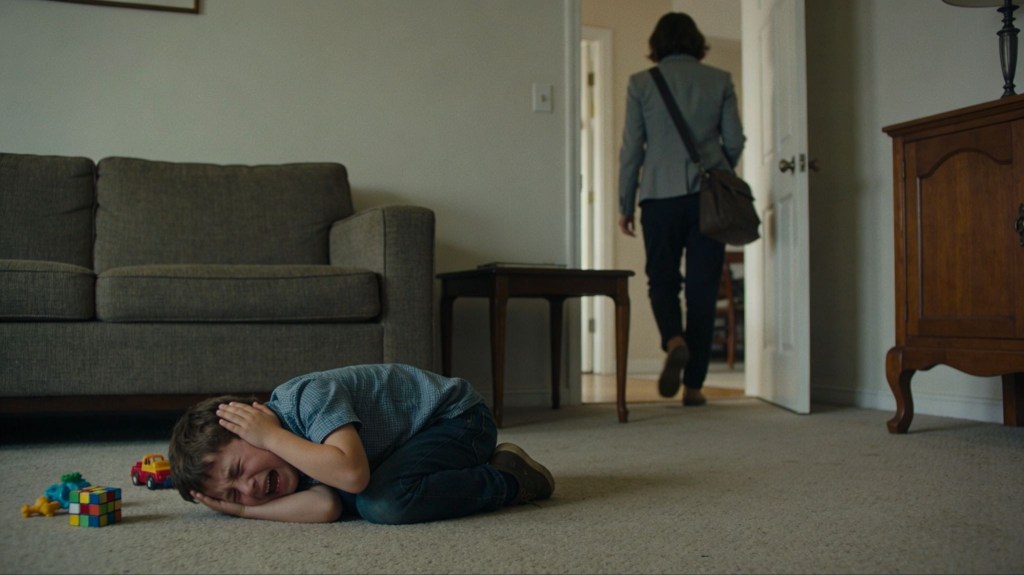
During the “No Interaction” phase, a child is forced into a state of total social isolation. They are left to endure their own escalating distress in a barren room while the only adult present remains a silent, unmoving statue. This experience teaches the autistic child that even their most desperate cries for help or acts of self-injury will be met with absolute, calculated isolation.
As the study moved into task sessions, this ignoring became a rigid treatment rule called extinction. When children tried to communicate that they were overwhelmed by pushing work away or screaming “no,” the therapist simply did not react. By silencing the child’s voice in this way, the therapist ensured that refusal was not an option; the session would only end once the work was completed. There was no “escape” through bad behavior. This forced compliance meant that the child’s only path to relief was to submit to the demands, because their protests no longer had the power to stop the difficult or unpleasant tasks being placed before them.
Even the moments of “relief” were strictly controlled through a process of turning away. If a child successfully completed their work and chose a break, the therapist would immediately turn their back, leaving the child in a thirty-second “social vacuum.” This ensured that the break was purely a removal of work and lacked any human connection or comfort. By systematically ignoring the child’s emotional state during work, distress, and rest, the study created a world where the child learned that their feelings had no power over the adults in the room.
While the data showed that the kids consistently chose food even as the work got harder, the human reality was hard work. Some children completed 40 tasks (on an “FR 40 Schedule”) in a row just for one tiny bite of food. The study shows that these children weren’t just “picking a prize”, they were showing how much they were willing to endure to get something they liked.
| Feature | Clinical Term | Child’s Reality |
| No Interaction | Assessment | Being ignored by an adult while in distress in an empty room. |
| Extinction | Treatment Rule | Realizing that screaming or crying will not stop the work. |
| FR 40 Schedule | Ratio Strain | Doing 40 tasks for a single bite of food or a cold break. |
| The Break | Negative Reinforcement | 30 seconds of being ignored by the therapist. |
The Breaking Point: When Rewards Become Burdens
The work tasks consisted of toddler/pre-school IQ tests components, and not school-based work. Participants were asked to engage with “work” such as stacking blocks, stringing beads, pegboard tasks, sorting colors, matching letters, and identifying opposites. Repeated demand to engage in below-age appropriate tasks and coupling that with a reward for engaging with that task disillusions people, and leads to psychological fragility. Here we see how the students lost their emotional stability and burned out from the compliance control.
In this study, there were significant moments where the “rewards” intended to motivate the children actually backfired. While the researcher initially thought that adding toys and attention would make a break more enjoyable, the kids didn’t always see it that way. For example, one child began pushing toys away during his break, and another stopped speaking to the therapist entirely during these “fun” periods. This suggests that what an adult considers a reward (like social interaction or play) might actually feel like more work or a source of stress to a child with Autism.
For one participant, social praise seemed to lose its value and actually became “aversive,” or unpleasant. Instead of feeling like a “thank you” for doing a good job, the teacher’s attention felt like something the child wanted to escape from. This leaves us with deep questions about the child’s experience: What does it feel like when a “break” doesn’t feel like relief anymore? How does it change a child when they learn that the only way to get a moment of peace is to work through tasks they find difficult or unpleasant?
Thought for the parents and readers
The use of behavioral economics to describe a child’s “elasticity” turns their exhaustion into a clinical data point, ignoring the human cost of the struggle. Ultimately, when the children keep working for a tiny reward, it isn’t a victory for the child. It is a validation of a system that is structured to win by default. From this perspective, the research doesn’t actually discover what a child “wants”. It merely proves what a child can be forced to endure.
For these five autistic kids, the study was a lesson in delayed gratification pushed to the extreme. While the study proved that food is a powerful motivator, it also highlighted that children have a “tipping point.” Their behavior showed that they aren’t just data points; they are individuals who feel the weight of every added task and the frustration of rewards that don’t always feel like a prize.
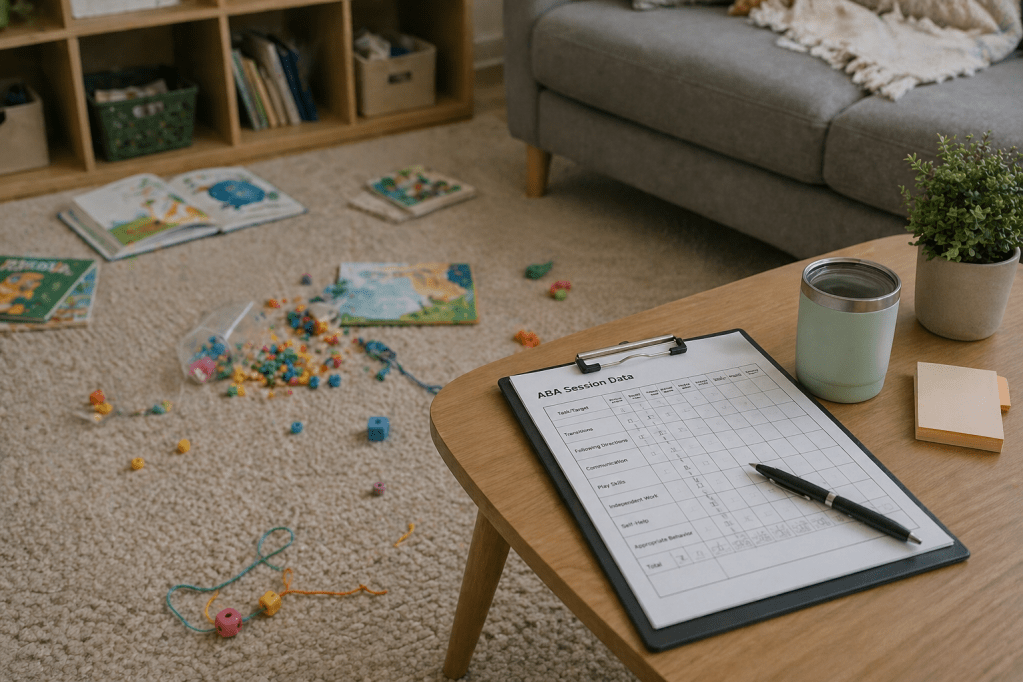
The lived reality for these five children was a highly coordinated environment where their internal feelings like frustration or fatigue, were secondary to the rules of the session. From the children’s perspective, their primary methods of communicating distress such as screaming or pushing materials away, suddenly lost all power to provide relief.
For the children, “planned ignoring” meant that they became exposed to an unresponsive adult in their school environment. The participant children were harmed by this exposure, as their new reality became increasingly inflexible. Their frustration or exhaustion did not matter to the person in charge. The data calls this “stability” and “procedural integrity,” but from a child’s perspective, it is the experience of being systematically unheard until they have no choice but to comply. The experiment unequally matched the powerful adult with the disabled child to solicit stamina data.
By using a very gradual process to make the work harder, the researcher ensures that the children are “trapped” into staying compliant. This is because the path to relief is so narrow, the children’s continued work isn’t necessarily a sign that they are happy or motivated. It is simply evidence that they have no other choice.The concern surrounding Tiffany Kodak stems from a potential discrepancy between her professional presentation and her actual licensing credentials. In behaviorism, she is frequently cited as an authority in Applied Behavior Analysis (ABA) research. She is currently an Associate Professor in the Department of Psychology at Marquette University. Her formal licensure appears to be strictly as a Licensed Behavior Analyst in Wisconsin, which does not require a Ph.D. to obtain. Public records indicate she does not hold a psychology license in Louisiana, and her National Provider Identifier (NPI) is tied to her status as a Board Certified Behavior Analyst (BCBA) rather than a clinical psychologist. For parents and practitioners, this distinction is critical; it suggests that while she operates within the academic and clinical sphere of psychology, her legal authority to practice and her professional accountability are grounded in behavior analysis rather than the broader, regulated field of clinical psychology.


Leave a Reply